

Every month, 5,000 entrepreneurs apply to become an Entrepreneur-in-Residence (EIR) at FutureSight. We speak with 50 of them personally. Approximately 12 to 13 make it to the next stage – a conversation with a FutureSight Partner. From this, we onboard between 2 to 4 EIRs every month who begin co-building a vertical B2B AI software company alongside us.
That’s a sub 0.10% acceptance rate.
We’re not sharing that number to be intimidating. We’re sharing it because we think it’s the most honest thing we can say upfront and because buried inside that number is everything you need to know about whether FutureSight is the right path for you. Understanding why 99.9% are rejected is the clearest way to understand who we are seeking as co-founders and if you are a fit.
When we look across the volume of applications we receive, a few patterns emerge that we know are worth being honest about. The majority of applicants are attracted to the idea of a venture studio and the concept of co-founding with institutional support, shared risk, and a built-in team. That’s understandable. But attraction to the concept is not the same as readiness for reality.
Some of the best EIRs we’ve onboarded came to us in transition: post-exit, between chapters, with real scar tissue, and/or the appetite to build again. That restless energy after a hard-earned exit isn’t a red flag. It’s often exactly the right moment.
That said, the fit has to be genuine. Not every entrepreneurial profile is at the right stage for this model, and we would rather be honest about that upfront than waste anyone’s time.
Why Most Applications Don’t Make It
The patterns are consistent. The most common reason? People arrive still in information-gathering mode. Curious, but not committed. The second most common – they can describe the category they’re interested in, but not the specific problem, the specific buyer, or why it hasn’t been solved yet. “I want to build an AI company in the healthcare space” is not a thesis. It’s a category.
What we offer is co-founding – shared risk, shared accountability, and a team that will challenge you as often as they support you. As one of our EIRs, Justin Mason, put it directly:
“You’re not going to get pushed to do the work. You’re going to get a process and efficient support and care and guidance, but you have to do the work.”
Founders who want to be carried don’t thrive here. Founders who want to be partnered with do. For the vast majority who are rejected from our recruitment process, it isn’t always permanent. Sometimes it’s just “not yet.”
Want the full breakdown? We put together a complete guide to our EIR selection process including:
• What venture builders really look for in founders.
• The most common reasons strong applicants get rejected.
• The 6 attributes that consistently get founders through.
• How to evaluate if this model is right for you — before you apply.
• What it actually means to co-build with a venture builders.
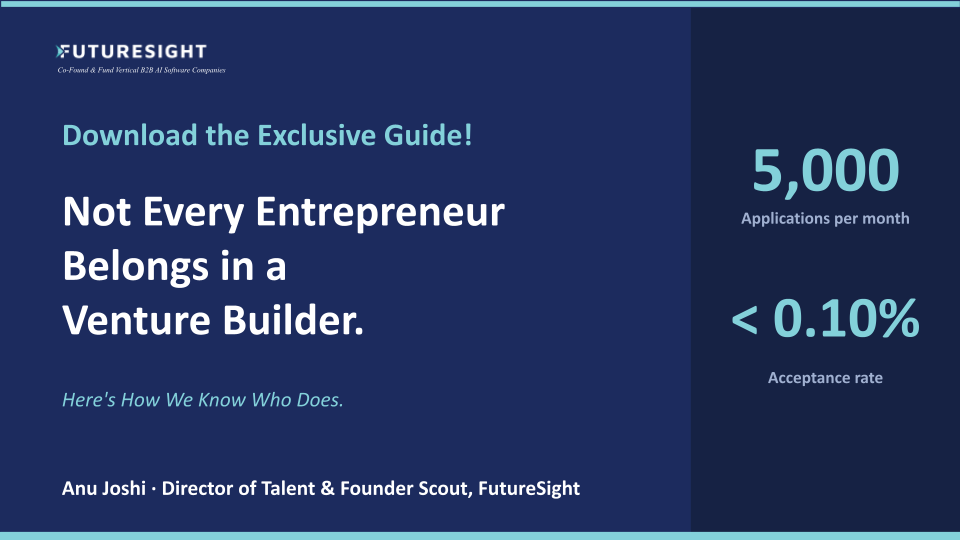
Download the exclusive guide here by filling out the form below.